By HomeFREA — General Contractor serving Raleigh, Cary, and the Triangle Last updated: [PUBLISH DATE]
Editorial note: If you are dealing with active water damage right now, your first calls should be to an electrician or fire department if there is any electrical safety concern, your insurance company, and a qualified mitigation professional. This article is educational and intended to help homeowners think through the response sequence and insurance claim process. It is not legal, insurance, or electrical safety advice. Always confirm specific coverage and procedures directly with your licensed insurance agent or broker, the North Carolina Department of Insurance, and licensed mitigation and restoration professionals before relying on any guidance in this article.
Water damage moves fast in a home. The first few hours matter more than anything else that happens later. What you do right now affects how much can be dried, what must be removed, and how smoothly the insurance process goes.
This guide from HomeFREA is designed for Raleigh homeowners dealing with active water damage from a burst pipe, appliance leak, roof issue, or plumbing failure. We focus on clear steps, real timelines, and common insurance mistakes that often create delays or unexpected costs.
TLDR: What to Do Right Now
If you only have a minute, here is the priority order:
- Stop the water source if it is safe
- Take photos and video before moving anything
- Protect people and pets first
- Call your insurance company within 4 to 12 hours
- Start professional mitigation within 24 hours
- Avoid signing anything without reading scope and payment terms
Water damage response is generally about speed, documentation, and control of the drying process.
The First 24 Hours: A Step-by-Step Action Plan

Step 1 (First 5 Minutes): Stop the Water
Turn off the water supply if the source is plumbing related. This may be under sinks, behind toilets, or at the main shutoff valve. If water is coming from the roof or exterior, focus on safety and containment.
Do not enter standing water near electrical outlets or appliances. If needed, shut off electricity at the breaker panel only if it is safe to do so. If you cannot reach the breaker safely, call a licensed electrician or your local fire department.
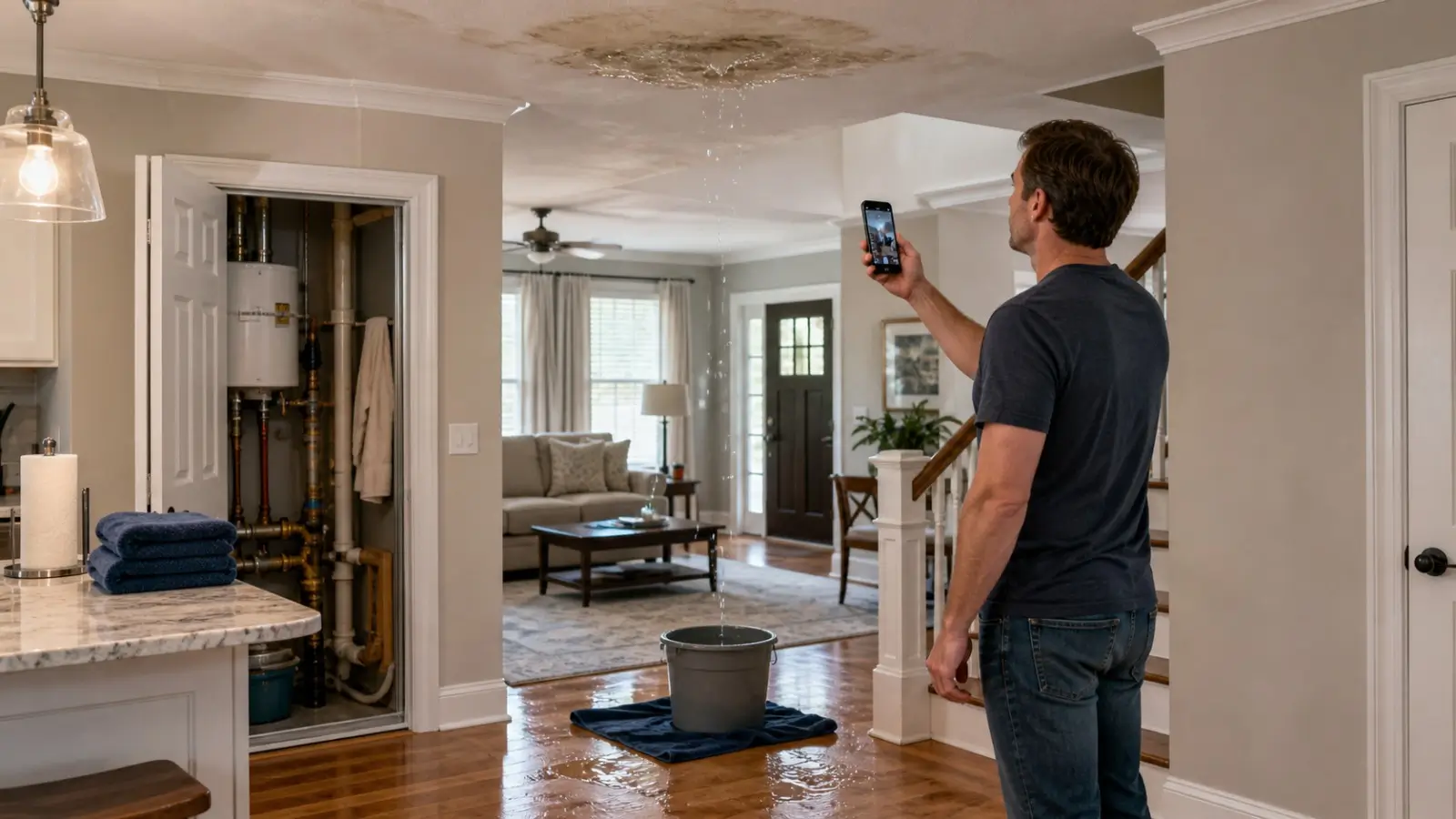
Step 2 (First 30 Minutes): Document Everything
Before moving items, take:
- Wide photos of each affected room
- Close-up photos of damage points
- Short videos showing active leaks or spread
- Images of ceilings, floors, and walls
Documentation generally helps establish the scope of loss for your water damage insurance claim. Keep receipts for emergency supplies.
Step 3 (First 1-2 Hours): Move What You Can
Move items that are not saturated:
- Furniture legs off wet flooring
- Rugs and textiles to dry areas
- Electronics away from moisture zones
Do not throw items away yet. Even damaged materials may be needed for insurance inspection under most policies.
If ceilings are sagging or bulging, avoid the area below them — saturated drywall can collapse without warning.
Step 4 (First 4-12 Hours): Call Your Insurance Company
Report the loss as soon as possible. Most policies require timely notification, and delays can complicate claims.
You do not need a full estimate at this stage. You need a claim number and basic guidance.
Ask about:
- Coverage for sudden water damage
- Emergency mitigation approval
- Documentation requirements
For NC-specific homeowners insurance guidance, see consumer resources from the North Carolina Department of Insurance (NCDOI).
Step 5 (First 24 Hours): Bring in Mitigation
Mitigation is the drying and stabilization phase. It typically includes:
- Water extraction
- Air movement and dehumidification
- Moisture mapping
- Containment setup if needed
Industry standards for drying are defined under IICRC S500, the recognized professional standard for water damage restoration.
Quick response generally reduces secondary damage like swelling, warping, and microbial growth.
Step 6 (First 72 Hours): Plan the Rebuild
Once drying begins, the next phase is planning reconstruction:
- Drywall removal scope
- Flooring replacement or repair
- Cabinet and trim evaluation
- Electrical and insulation checks if affected
This is where rebuild contractors step in after mitigation stabilizes the structure.
Start planning early so there is no delay once drying is complete.
💬 HomeFREA Insight: The biggest mistake we see in the first 24 hours is not the actions homeowners take — it’s the order they take them in. Document before you move anything, even if the moving feels urgent. Photos taken after items are already moved often raise questions during claim adjustment that photos taken at the moment of discovery never raise.
The Three Phases Most Homeowners Don’t Understand
Phase 1: Mitigation
This is emergency stabilization. The goal is to stop damage from spreading.
Typical work includes water removal and drying equipment.
Phase 2: Restoration
This phase focuses on cleaning and preparing materials that can be saved.
It may include odor treatment, surface cleaning, and moisture verification.
Phase 3: Rebuild
This is reconstruction. It includes replacing drywall, flooring, cabinetry, and finishes.
Most homeowners are surprised that different teams often handle each phase.
Why the Mitigation Company and the Rebuild Contractor Are Usually Different Vendors
Mitigation requires specialized drying equipment and rapid response. Rebuild requires construction licensing, permitting, and finish carpentry.
Separating these phases generally helps ensure scope accuracy and avoids overlapping work or scope creep.
The Most Common Insurance Claim Mistakes Homeowners Make

Six mistakes that cost homeowners time and money:
- Throwing things away before documentation — Discarding damaged materials too early can limit claim verification. Always document first.
- Signing the first vendor’s direction-of-pay without reading it — Some agreements assign payment directly to vendors. Read all terms carefully before signing.
- Letting mitigation run open-ended without a scope cap — Without clear limits, mitigation costs can escalate beyond what is necessary for drying.
- Accepting the first settlement offer without a contractor’s scope — Initial estimates may not reflect full rebuild requirements.
- Letting the mitigation company quote the rebuild — This can create scope overlap. Rebuild should generally be independently assessed.
- Missing statutory deadlines — North Carolina insurance timelines vary by policy, but delays in reporting or documentation can affect claim processing. See guidance at the NC Department of Insurance.
💬 HomeFREA Insight: The mitigation company is hired to dry the structure. The rebuild contractor is hired to reconstruct it. When the same vendor does both, there is no independent check on rebuild scope. That is the single most expensive structural conflict-of-interest in residential water damage claims, and homeowners often do not realize they have a choice.
Should You Use Your Insurance Company’s Preferred Contractor?
What a Preferred Vendor or Direct Repair Program Actually Is
These are pre-approved contractors that work within insurer networks. They generally follow set pricing guidelines.
When the Preferred Vendor Path Works
It can work well for simple repairs with limited scope and clear damage boundaries.
When You Want an Independent Contractor
Complex water damage, older homes, or multi-room losses often benefit from independent scope evaluation. Older Raleigh homes in neighborhoods like Hayes Barton and Five Points often have layered system conditions that complicate scope estimation, which makes independent evaluation more valuable.
What NC Department of Insurance Says About Vendor Choice
Homeowners generally have the right to choose their contractor under North Carolina regulations. See consumer guidance at NCDOI.
What’s Typically Covered (And What’s Typically Not) Under NC Homeowners Insurance
Sudden and Accidental Water Damage
Typically covered when caused by burst pipes or sudden appliance failure.
Gradual Leaks
Typically excluded as wear and tear or maintenance issues.
Flood Damage
Typically not covered under standard policies and generally requires separate NFIP coverage through FloodSmart.
Sewer and Drain Backup
Often requires a specific endorsement depending on policy. Confirm with your broker.
Mold Coverage
Typically limited and depends on whether it results from a covered water event. Health context is available from the EPA mold guidance and CDC mold information.
Permits and Code Compliance for Water Damage Rebuild in Raleigh

When a Rebuild Triggers a Permit
Permits are typically required when structural work, electrical changes, or plumbing replacements occur. See our Raleigh building permit cost and timeline guide for detailed permit cost ranges and process timing, and the City of Raleigh Permit Portal for current requirements.
Like-for-Like vs Code Upgrade
Rebuilds may require upgrades to meet current North Carolina State Building Code requirements, especially when systems are replaced rather than restored.
Hidden Damage Discovered During Rebuild
It is common to uncover additional damage once walls and floors are opened. This may expand scope and permitting requirements.
Two Water Damage Scenarios
The following are illustrative scenarios drawn from typical water damage patterns we see in Raleigh and surrounding areas. Specific outcomes depend on damage extent, mitigation timing, and insurance coverage.
Dishwasher Leak in West Cary
A supply line failure affects kitchen flooring and adjacent drywall. Mitigation is completed within days, but flooring replacement and cabinet adjustments extend the rebuild timeline. The kitchen remodeling and flooring work proceeds after structural drying is verified.
Slow Roof Leak in Hayes Barton
Long-term moisture intrusion leads to ceiling damage and insulation replacement. Drying takes longer due to hidden saturation, increasing rebuild scope. Structural repair is evaluated alongside drywall and finish work.
When the Claim Is Denied or Underpaid
Supplements
Additional documentation can be submitted if initial estimates do not match actual repair scope. A rebuild contractor’s scope often supports supplement requests.
Public Adjusters
Some homeowners choose licensed public adjusters to assist with claim documentation. This is separate from contractor services and is regulated under North Carolina law.
NCDOI Complaint
Homeowners can file concerns through the NC Department of Insurance.
When to Consult an Attorney
For complex disputes or coverage disagreements, legal guidance may be appropriate depending on case details.
💬 HomeFREA Insight: Most denied or underpaid claims we see came from incomplete scope, not bad-faith insurer behavior. Getting a detailed rebuild scope from an independent contractor is often what unlocks a supplement, because the original estimate simply missed something the adjuster didn’t see during the first walk-through.
Send your mitigation report, photos, and any insurance estimates you’ve received. We return an independent rebuild scope and budget range typically within 2 business days.
How HomeFREA Approaches Water Damage Rebuild
HomeFREA focuses on structured rebuild planning after mitigation is complete.
We coordinate:
- Scope validation after drying is verified
- Permit alignment when required
- Material replacement planning
- Finish reconstruction
For specific rebuild needs, see our water damage repair services, whole home remodeling, drywall and painting, flooring installation, kitchen remodeling, and bathroom remodeling.
We work across Raleigh and surrounding Wake County communities including Cary, Apex, Holly Springs, Wake Forest, Durham, and Fuquay-Varina.
Frequently Asked Questions
What should I do first when I find water damage in my Raleigh home?
Stop the water source if safe, then document the damage with photos and video before moving items. After that, contact your insurance provider and begin mitigation within 24 hours. Quick action generally reduces secondary damage and supports a clearer insurance claim process.
Is water damage covered by homeowners insurance in North Carolina?
Water damage is typically covered when it is sudden and accidental, such as a burst pipe. Gradual leaks, neglect, or maintenance-related issues are often excluded. Coverage varies by policy and carrier, so confirmation should come from your insurance provider or the NC Department of Insurance.
Should I use my insurance company's preferred contractor?
Preferred contractors are pre-approved vendors within insurer networks. They can work well for straightforward repairs. However, homeowners generally have the right to choose their own contractor in North Carolina. Independent contractors may be helpful for complex or multi-room water damage projects.
What is the difference between mitigation, restoration, and rebuild?
Mitigation stops active damage and dries the structure. Restoration focuses on cleaning and preparing salvageable materials. Rebuild is reconstruction of damaged building components such as drywall, flooring, and cabinetry. Each phase serves a different purpose in the recovery process.
How long do I have to file a water damage claim in NC?
Timelines vary by policy, but claims should be reported as soon as possible after discovery. Delays can affect documentation and processing. The NC Department of Insurance provides consumer guidance on claim reporting.
Will my insurance cover mold from water damage?
Mold coverage is typically limited and depends on whether it results from a covered water event. Many policies include caps or specific exclusions. Health information on mold exposure is available from the EPA and CDC.
What if my water damage claim is denied or underpaid in NC?
If a claim is denied or underpaid, homeowners can request a detailed explanation, submit additional documentation, or file a complaint with the NC Department of Insurance. Outcomes depend on policy language and documented cause of loss.
Do I need a permit to repair water damage in Raleigh?
Permits are typically required if structural, electrical, or plumbing systems are repaired or replaced. Minor cosmetic repairs may not require permits. Permit requirements are outlined by the City of Raleigh Permit Portal.
How much does water damage repair cost in Raleigh?
Costs vary widely depending on severity, affected materials, and rebuild scope. Minor repairs may range from a few thousand dollars, while full reconstruction can reach significantly higher ranges depending on structural impact and finish levels. A site walk-through generally provides a more accurate range.
Does HomeFREA do water damage rebuild work in Raleigh?
Yes. HomeFREA handles water damage rebuild projects across Raleigh and surrounding Wake County communities. We provide independent rebuild scope development, budget ranges, and adjuster coordination with a typical turnaround of up to 2 business days depending on project volume.
Key Takeaways
- The first 24 hours generally determine most of the outcome
- Documentation before removal is critical for insurance claims
- Mitigation and rebuild are separate phases and often handled by different vendors
- Insurance coverage depends on cause and policy terms
- Permits may be required depending on rebuild scope
- Independent contractor scope helps clarify rebuild expectations
- The NC Department of Insurance is the primary resource for consumer questions about coverage and claims
Request a Rebuild Quote from HomeFREA

If you are dealing with active or recently stabilized water damage, we can prepare a structured rebuild scope and budget range based on your mitigation report and photos.
Independent rebuild scope, budget range, and adjuster coordination provided based on project review. Typical turnaround: up to 2 business days.
This guide is educational and not legal, insurance, electrical safety, or hazardous-material handling advice. Water damage situations vary widely and require professional evaluation. Always confirm specific coverage and procedures with your licensed insurance agent or broker, the North Carolina Department of Insurance, licensed mitigation and restoration professionals (per IICRC S500), licensed electricians for electrical safety concerns, and applicable Raleigh and Wake County authorities for permit requirements before relying on any information in this article.