
Custom Home Building
Building a custom home is a big decision, and the stress usually comes from unclear scope and uneven coordination. The construction phase moves best when the schedule is realistic, selections are timed to long-lead items, and every trade knows what is coming next. HomeFREA serves as your custom home builder for the build phase, coordinating trades, inspections, and sequencing while keeping communication consistent. If you already have plans, or you are working with an architect, we help turn that scope into an organized build that finishes cleanly.
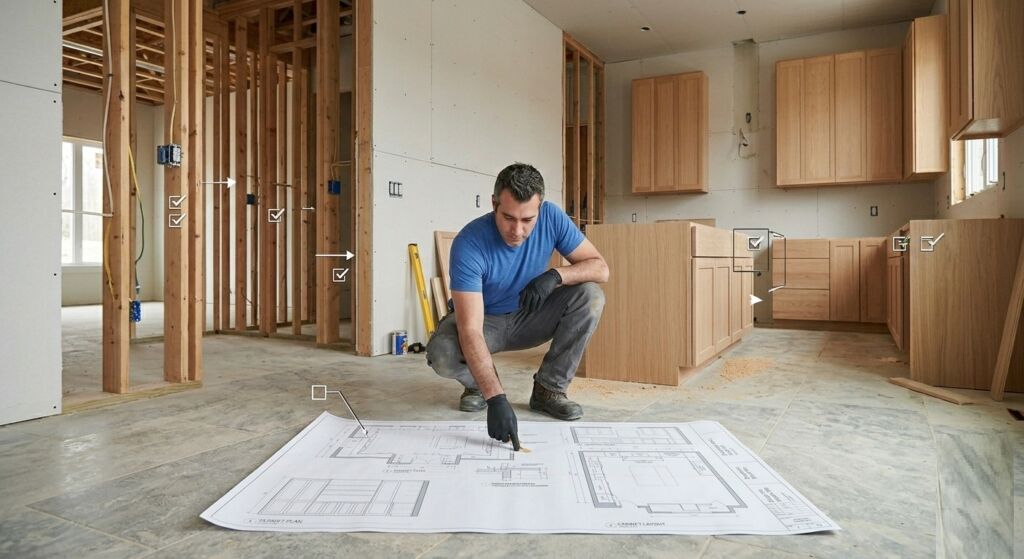
Who we’re a good fit for
Custom home building works best when you want one point of accountability for the construction phase and you value predictable coordination across trades.
We are a strong fit if you want:
If you are exploring smaller-scale ground-up space, an ADU may be a better first step.
If you are expanding an existing home rather than building new, start here.
- A clear scope and written assumptions before work starts
- A practical schedule that accounts for permitting steps, inspections, and lead times
- Sequencing that prevents rework, especially around finishes
- A punch list process that closes out details at the end
What’s typically included
Every build is different, but the core value in a custom home project is coordination and control of the construction phase.
- Trade coordination across the build, with sequencing and handoffs managed intentionally
- Schedule management with checkpoints tied to inspections and long-lead selection
- Walkthroughs and punch list closeout so the project finishes cleanly
Even when finishes are selected by you or your designer, timing still matters. These scopes often sit on the critical path:
- Cabinet installation planning and tolerance coordination
- Flooring scheduling and transitions
- Tile sequencing, especially in wet areas and feature walls
- Doors and trim scheduling aligned to paint and flooring
- Drywall finishing and paint cadence tied to other trades
Custom home projects go smoother when the boundaries are explicit. Depending on how your project is structured, these items may be excluded or handled separately.
- Architectural services and stamped engineering, if not part of the offering
- Land acquisition, surveying, and pre-purchase land evaluations
- Utility provider work outside the defined scope and schedule control
- Specialty systems beyond the defined build scope
- Permit fees and third-party requirements that vary by jurisdiction (should be listed clearly)
If you already have an architect or engineer, we can coordinate the construction around those plans and requirements. If you do not, we can still help clarify what information is needed to price and schedule the build responsibly.
Decisions that shape your build
A custom home has hundreds of decisions, but a few drive most of the budget and schedule impact.
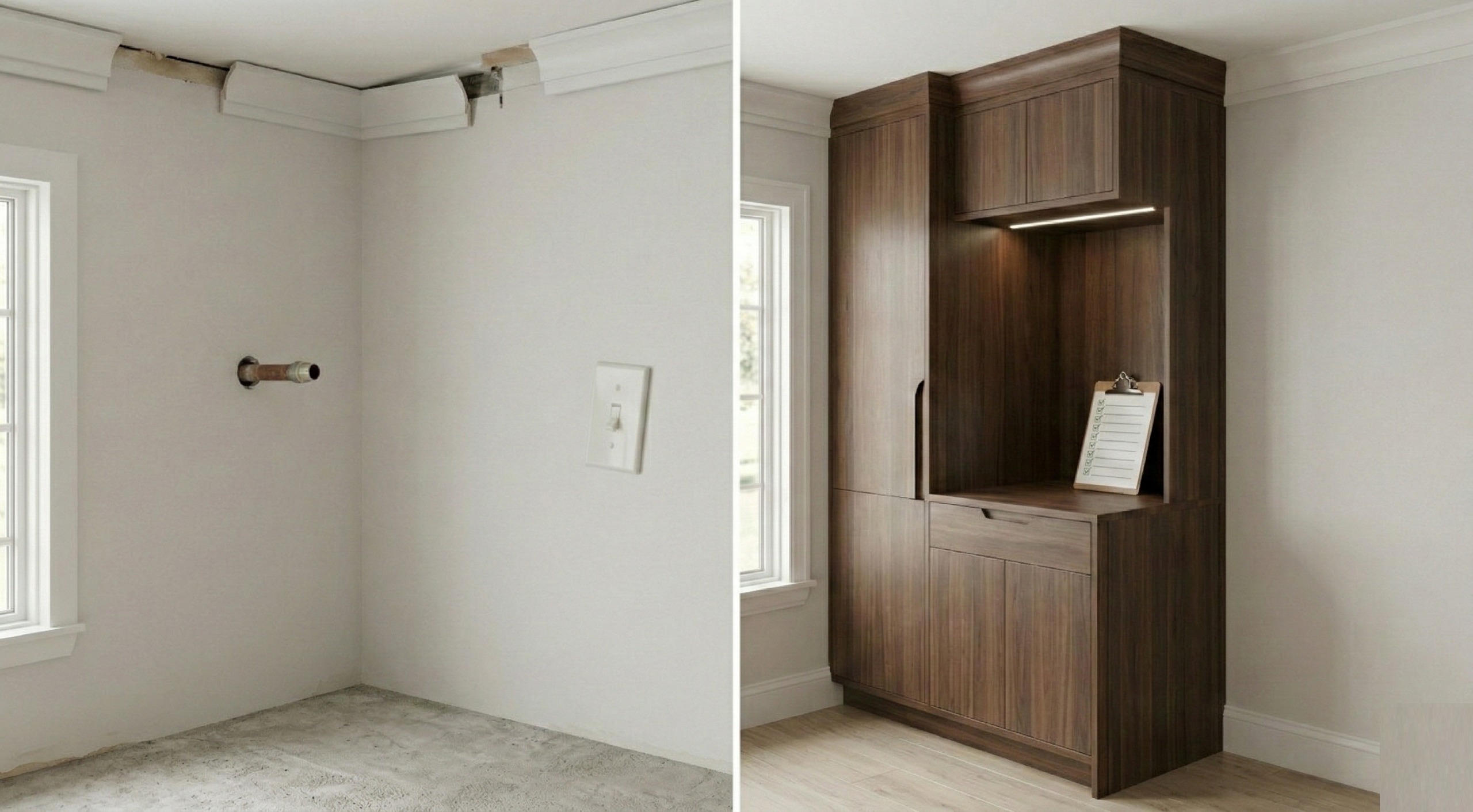
Finish level and specification clarity
Finish level is not just “basic vs premium.” It is how detailed the selections are, how many custom conditions exist, and how much coordination is required at transitions. Clear specs reduce change orders and prevent stalls mid-build.
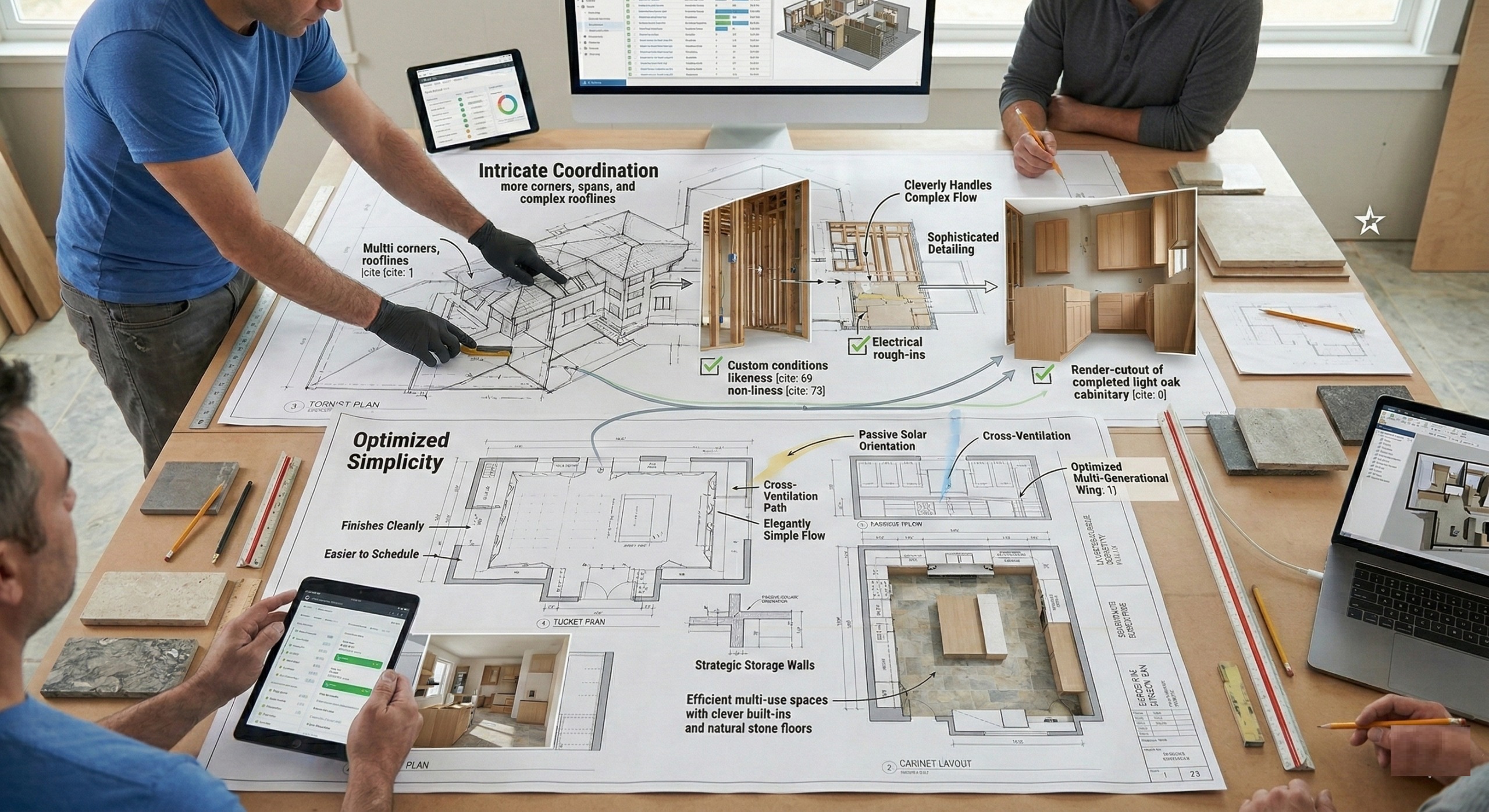
Floor plan complexity
More corners, spans, and complex rooflines tend to require more coordination and more time. Simple layouts can still be beautiful, but they are usually easier to schedule and finish cleanly.
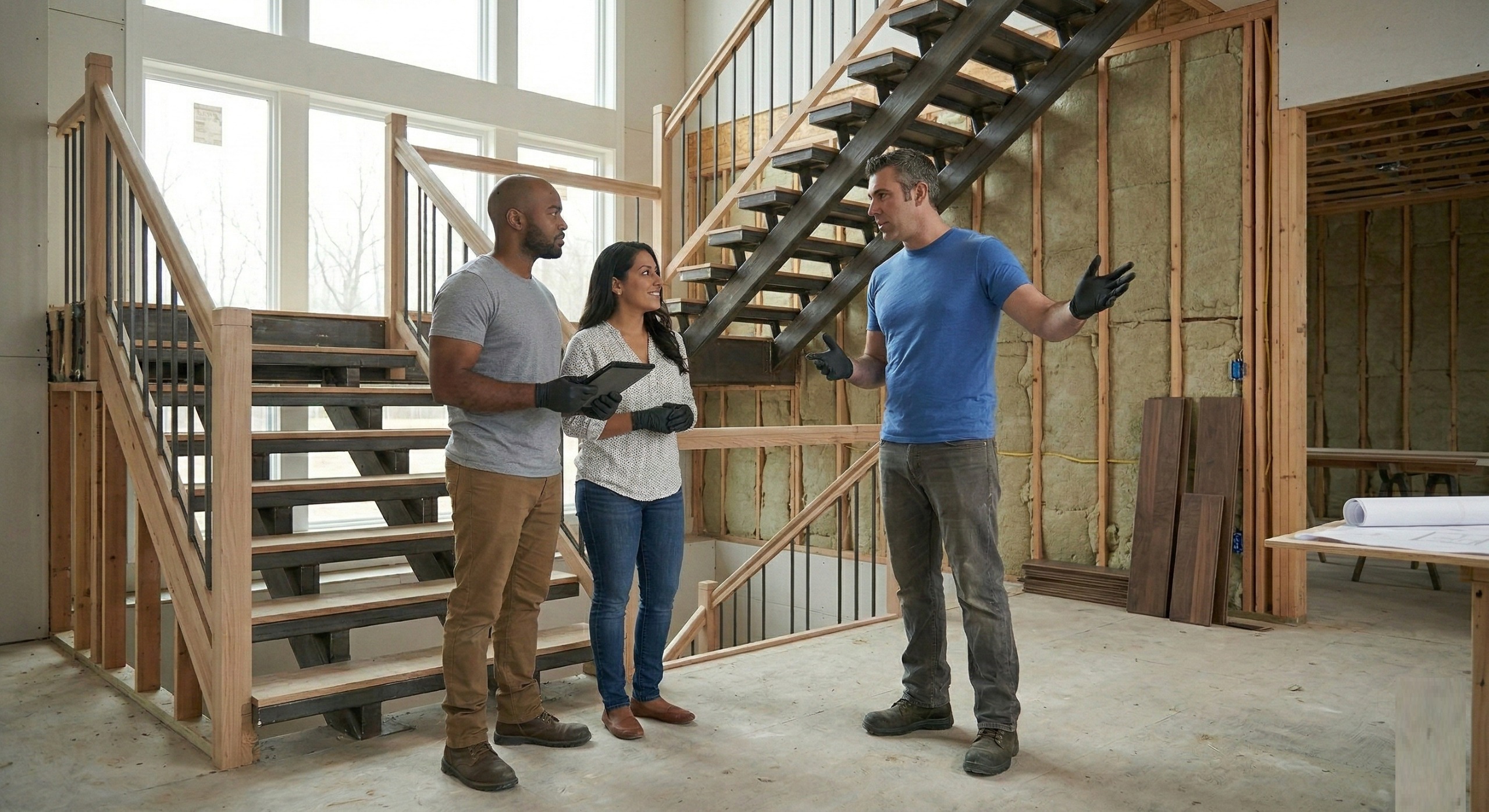
Site constraints (high level)
Access, grading conditions, and staging space affect labor efficiency and sequencing. These constraints are why site context should be considered early, even when you have a great plan set.
Selection timing and long-lead items
Cabinets, windows and doors, certain flooring products, tile, plumbing fixtures, and lighting can all become long-lead items. If they are selected late, the schedule has fewer options.
How it works
Request an estimate
Share your plans (if available), a short description of goals, your timeline, and the property location. If you are early, send what you have and we will tell you what is needed next.
Scope review and build planning
We review the scope for clarity, identify likely scheduling constraints, and discuss assumptions that affect pricing and sequencing.
Proposal and schedule framework
You receive a written scope with inclusions, exclusions, and assumptions. We outline a schedule approach that accounts for inspections and long-lead selections.
Construction coordination and sequencing
We manage the trade flow so framing, rough-ins, drywall, paint, flooring, tile, cabinets, and trim do not conflict. Selections are timed to avoid preventable downtime.
Walkthrough and punch list closeout
We complete final walkthroughs, document punch items, and close them out so the project ends cleanly.
What drives custom home building cost
Custom home cost is shaped by the size of the build, the complexity of the scope, and the finish decisions.
Size and overall scope
More square footage generally means more materials and labor, but the scope also expands with the number of rooms, baths, and built-in features.
Complexity and detailing
Complex rooflines, custom features, and non-standard conditions increase coordination time and trade labor.
Finish level
Cabinetry, flooring, tile, doors and trim details, fixture packages, and specialty finishes can change the budget significantly. Defining a finish level early improves estimate stability.
Site constraints (high level)
Access, staging, and property conditions affect the way the build is executed and scheduled. These are real cost drivers, even when the plan set is solid.
If you want more detail on finish-driven scope, review these pages:
Need assistance?
Timeline drivers and scheduling realities
The construction phase timeline depends on scope, inspection cadence, and the availability of key materials.
Permit path and inspection cadence
Permitting steps and inspection scheduling can create fixed checkpoints. When those apply, the schedule should be built around them, not squeezed in at the last minute.
Long-lead selections
Late selection decisions often cause the biggest delays. Cabinets, certain flooring products, tile, and fixtures can extend the schedule if the order timing does not match the build sequence.
Change management during construction
Changes mid-build can be handled, but they impact sequencing and sometimes trigger rework. Written change documentation protects both timeline and budget.
Trade coordination and handoffs
A smooth schedule depends on clean handoffs. When drywall finishing, paint, flooring, and trim overlap incorrectly, you lose time and quality.
Proof: custom build project examples
Project example 1
New build with finish sequencing focus
-
1
What we did
Coordinated trade sequencing from rough-ins through finish carpentry -
2
Managed selection timing for long-lead finish items -
3
Closed out with a documented punch list process
Project example 2
Custom home with detailed interior finish coordination
-
1
What we did
Coordinated tile, cabinetry, and flooring transitions for clean alignment -
2
Scheduled drywall finishing and paint cadence to protect final finishes -
3
Completed walkthroughs and closeout punch items
Project example 3
Build with doors, trim, and paint alignment
-
1
What we did
Coordinated door delivery timing and install sequencing -
2
Aligned trim and paint touch-ups for clean finish consistency -
3
Closed out details with final walkthrough and punch completion
Related services
These services often overlap with custom home construction scope and finishing.
Areas we serve
Custom home building is available across our core service area. Start with your local page, or view all service areas.
What you can expect from HomeFREA
- Scope clarity up front so you can make decisions with fewer surprises
- Trade coordination across the build with sequencing designed to prevent rework
- Jobsite protection and organized cleanup as part of the routine
- Communication cadence so you know what is happening next and what decisions are needed
- Walkthrough and punch list closeout so details are addressed, not deferred
Frequently asked questions
Cost is most influenced by size, complexity, and finish level. A simpler footprint with a defined finish package is usually easier to price and manage than a design with many custom conditions and late selection decisions. Site constraints can also change labor efficiency and staging, which can affect pricing.
Timeline varies based on permitting steps, inspection cadence, scope complexity, and long-lead selections. Some builds move steadily once the scope and selections are locked. Others extend when key items like cabinets, doors, tile, or fixtures are delayed. After scope review, we provide a realistic schedule framework and the main drivers.
Selections that affect rough-ins and long-lead ordering should be decided early. Cabinet layouts, plumbing fixture specs, tile direction, and flooring type can all impact sequence and delivery timing. The more decisions you finalize before construction reaches that phase, the fewer schedule gaps you will see mid-build.
Changes happen, but they must be documented before work proceeds. We outline what changes in scope, what it costs, and how it impacts the schedule so expectations stay aligned. This protects sequencing across trades and reduces rework, especially once finishes are in motion.
Permit and inspection requirements vary by project and jurisdiction. We plan around the likely checkpoints and coordinate scheduling so inspections do not become last-minute surprises. If your project has a defined permit path through your architect or engineer, we align our schedule and trade sequencing to that plan.
Yes, in many cases. When you already have plans, the first step is reviewing them for scope clarity, selection dependencies, and schedule constraints. If items are unspecified, we identify what needs to be decided so pricing and sequencing are realistic.
Near the end of the build, we complete walkthroughs, document remaining items, and schedule the work to close them out. Punch list closeout is not a single day event, it is a controlled final phase that ensures the home feels finished and consistent across spaces.
Ready to discuss your build?
Share what stage you are in, upload plans or sketches if available, and include the property location plus your rough timeline. We will confirm next steps for scoping and estimating.