
Cabinet Installation
Cabinets set the visual line of a kitchen or bath, but they also control how countertops template, how drawers clear, and how appliances fit. Good cabinet installation comes down to leveling, fastening, and clean scribing to real-world walls and floors. HomeFREA installs cabinets with a focus on correct tolerances, consistent reveals, and sequencing that keeps the rest of the project moving. If this is part of a remodel, we coordinate timing with rough-ins, countertop templating, and backsplash work so you avoid rework and schedule gaps.

When cabinet installation is the right fit
Cabinet work is a good fit when you want a clean, durable installation and you want to avoid the common problems that show up later, like uneven countertop seams, doors that drift, or filler gaps that look improvised.
Common scenarios:
- Kitchen remodel with new base and wall cabinets
- Bathroom vanity replacement or a full bath remodel
- Whole-home refresh where cabinetry is part of a broader finish package
- A cabinet upgrade that needs correct leveling, scribing, and trim panels
- A project with tight tolerances for appliances, islands, or tall pantry units
What’s typically included
Every project is scoped to your layout and cabinet package, but a typical cabinet installation scope includes the items below.
- Site review of openings, walls, and floor conditions
- Layout verification and reference lines (level and plumb planning)
- Base cabinet installation with leveling and fastening
- Wall cabinet installation with safe mounting and consistent alignment
- Island cabinet installation where included
- Filler strips, end panels, and basic trim integration as scoped
- Toe kick installation as scoped
- Cabinet door and drawer adjustments for consistent gaps and operation
- Jobsite cleanup and punch list closeout
Cabinet proposals can look similar but cover different boundaries. These items should be clearly included or excluded in writing so you can compare bids accurately.
Often excluded unless explicitly included:
- Cabinet design services or detailed layout engineering
- Structural changes to walls or floors
- Plumbing and electrical rough-in work beyond what is listed in scope
- Countertop fabrication and installation (handled by a countertop provider)
- Appliance supply, delivery, and specialty installations unless included
- Major drywall flattening or wall rebuild work beyond small touch-ups
- Permit fees or third-party requirements (scope dependent)
If the project uncovers structural issues that affect cabinet alignment, address those before finishes are installed.
What needs to happen before cabinets go in
A clean installation starts with readiness. These items reduce delays and prevent rework.
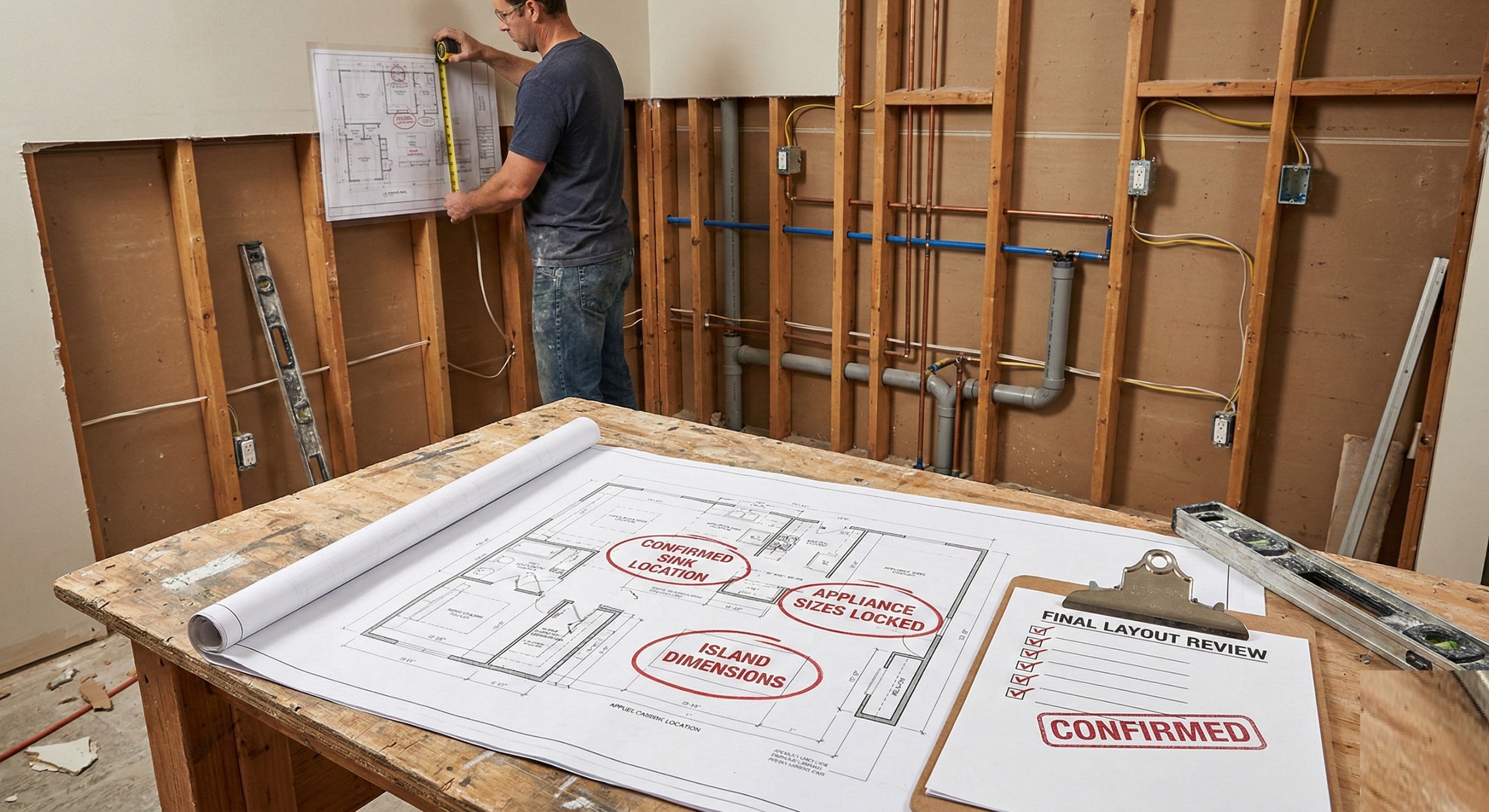
Confirm final layout decisions
Appliance sizes, sink location, and any island dimensions should be locked. If the layout changes after installation begins, the downstream impacts are usually expensive.
Complete rough-ins when required by scope
If plumbing or electrical locations are changing, those decisions should be resolved before cabinets are installed. It is easier to correct rough-ins on open walls than after cabinets are in place.
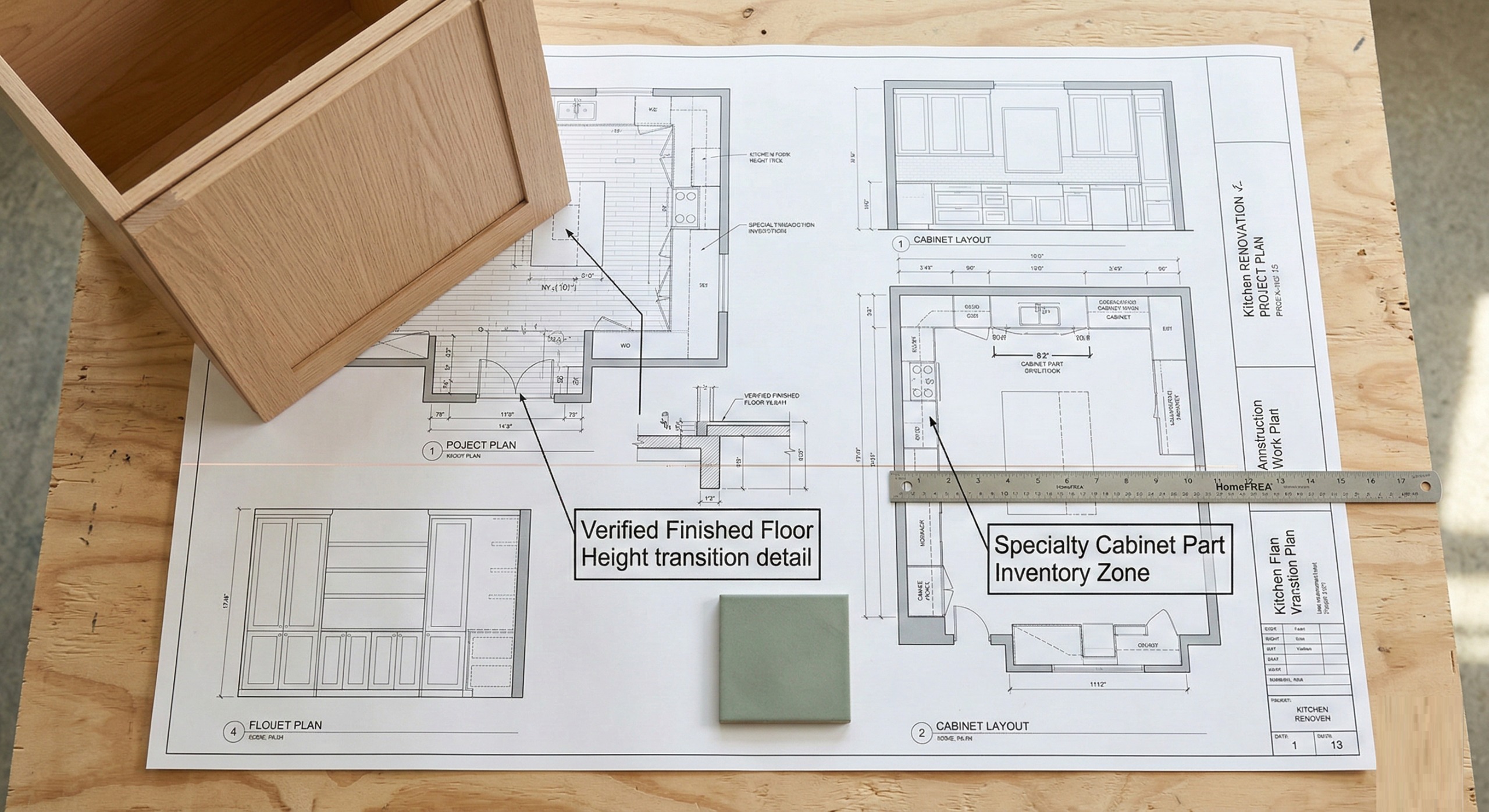
Verify flooring plan and finished floor height
Flooring thickness affects toe-kick heights, dishwasher clearance, and trim details. If flooring is being replaced, define the sequencing early.
Link: /services/flooring-installation/
Confirm cabinet delivery, condition, and any missing parts
Inventory the order and confirm any specialty pieces like panels, fillers, crown, and hardware so the install does not stall midstream.
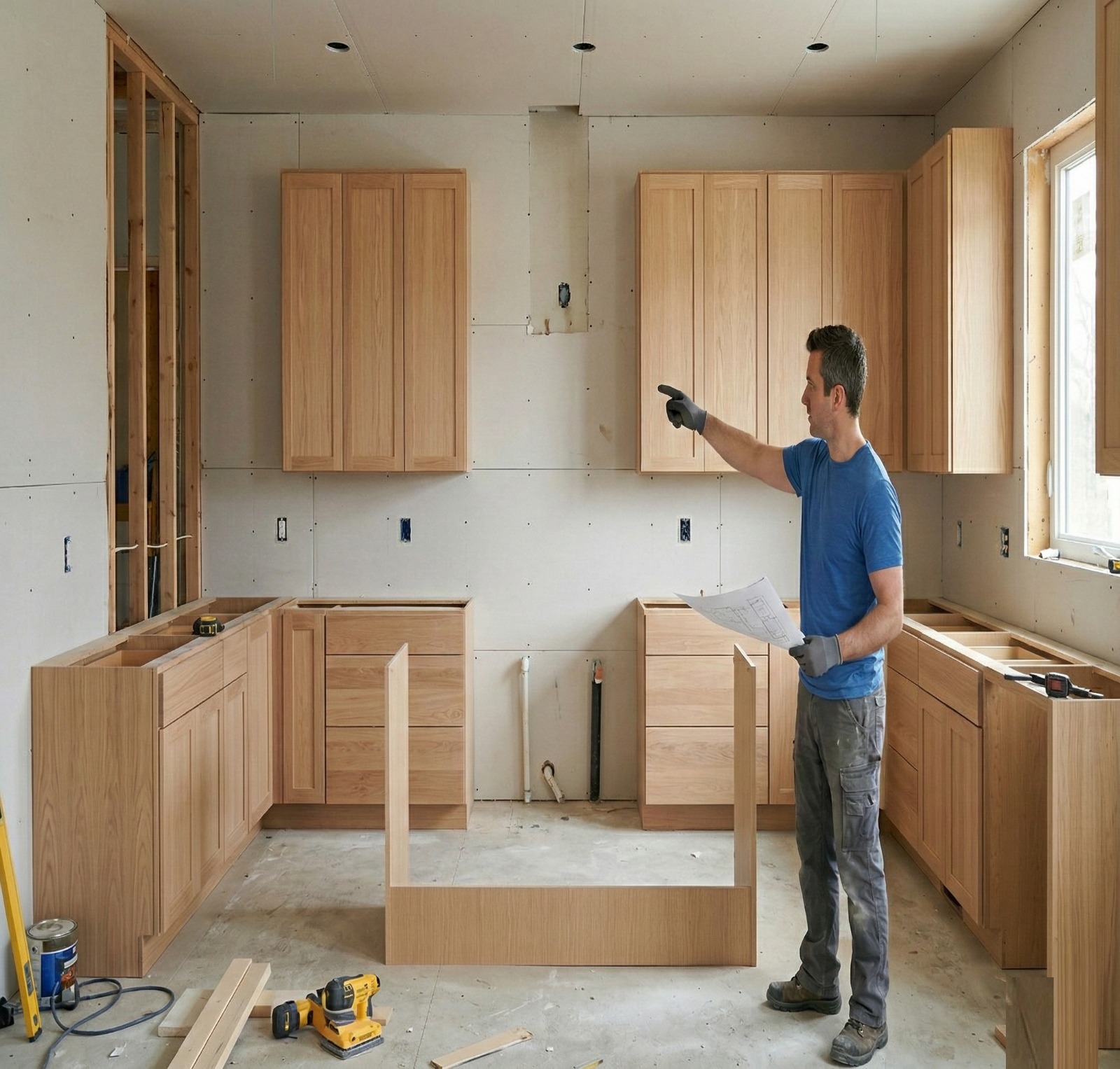
Plan the countertop timeline
Countertops template after cabinets are installed and secured. That means cabinet completion is a schedule gate for counters.
How it works
Request an estimate
Send photos of the space, your cabinet layout (if available), and your address or neighborhood. Include whether this is a kitchen, bath, or both.
Site visit and scope confirmation
We verify wall and floor conditions, measure critical openings, and confirm what is included for panels, fillers, toe kicks, and trim.
Proposal and sequencing plan
You receive a written scope with inclusions, exclusions, and assumptions. We identify dependencies that affect schedule, especially countertop templating and any rough-in changes.
Installation and coordination
Cabinets are set, leveled, and secured. Doors and drawers are adjusted. If part of a remodel, we coordinate timing with flooring, paint, and tile steps.
Walkthrough and punch list closeout
We confirm alignment, operation, and finish details, then document and close out punch items so the installation is complete.
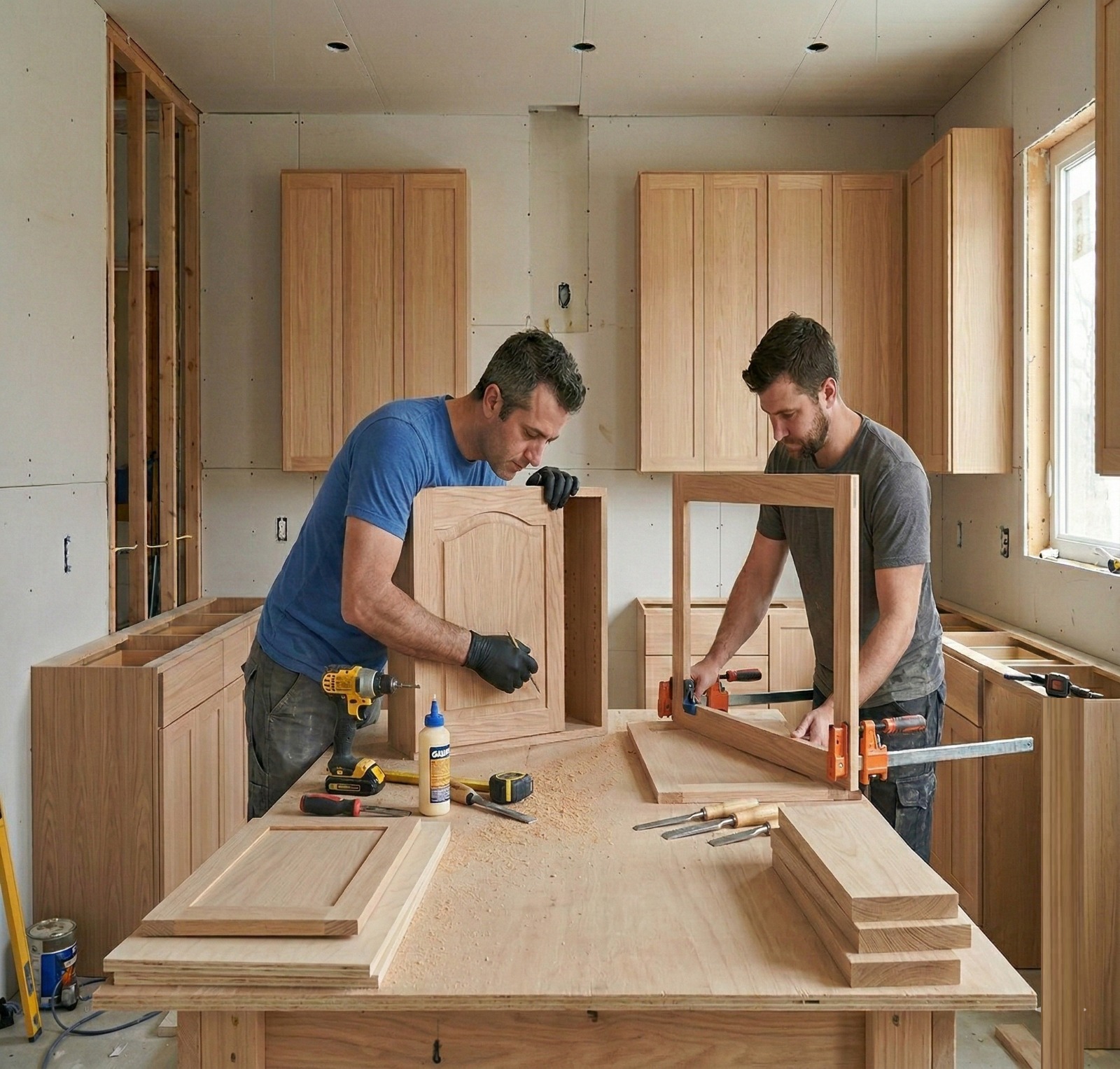
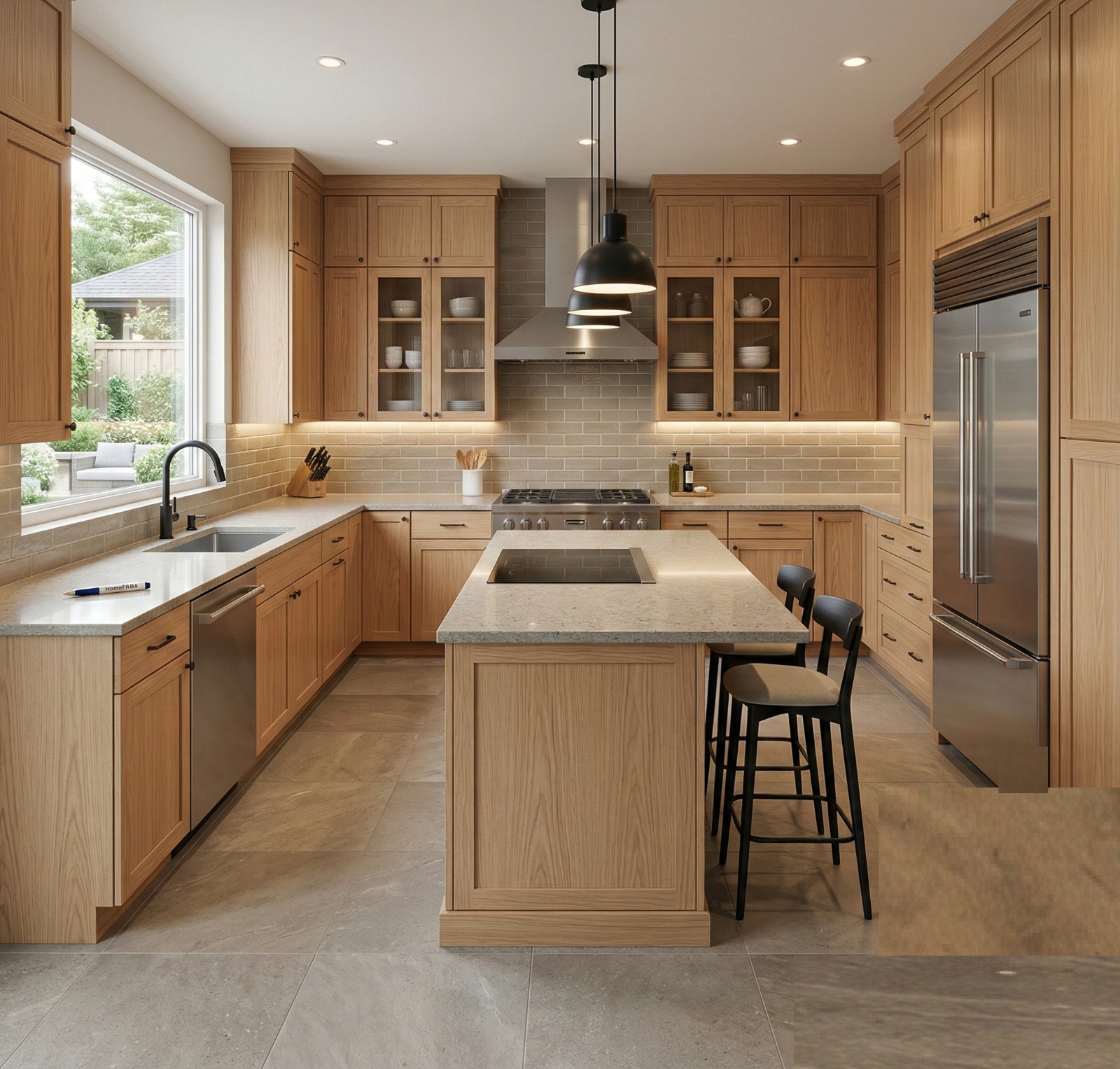
How we coordinate countertops and backsplash
This sequence is where many projects lose time. The clean path is straightforward when it is planned early.
Cabinet installation and leveling
Cabinets must be set, leveled, and secured before countertops can template accurately. If cabinets are not stable, countertop seams and reveals can suffer.
Countertop templating
The countertop provider templates after cabinets are installed. Template timing is usually the first scheduling checkpoint after cabinet install.
Countertop fabrication and install
Fabrication time varies by material and provider. Once installed, the countertop becomes the reference surface for backsplash.
Backsplash tile
Backsplash comes after countertops so the tile meets a finished surface cleanly. If you are doing a backsplash, plan it as a defined scope.
If you are remodeling the whole kitchen, this sequencing is typically managed under the kitchen remodel scope.
What drives cabinet installation cost
Cabinet installation pricing depends less on the box count alone and more on the conditions and detailing.
More cabinets increase labor, but complexity matters too. Tall pantries, islands, and corners require more planning and detailing than straight runs.
Older homes often have out-of-plumb walls and uneven floors. Scribing, shimming, and careful alignment take time, but they are what make the finished product look intentional.
End panels, refrigerator panels, decorative fillers, and trim details add labor. These items also control how “built-in” the final installation looks.
Dishwasher clearance, range fit, and refrigerator openings are detail-heavy. Tight tolerances require careful planning and sometimes adjustments to keep clearances correct.
Need assistance?
Timeline drivers and scheduling realities
Cabinet install timelines are shaped by delivery timing and the countertop schedule more than most people expect.
Cabinet delivery and missing components
The most common delay is not labor. It is waiting on a missing panel, filler, or replacement door.
Countertop templating and fabrication lead time
Countertops template after cabinets are installed. Fabrication timelines vary, so schedule should be planned around that reality.
Condition surprises after demo
Multi-room coordination
If you are installing cabinets in more than one room, sequencing can matter. Kitchens and baths often share subcontractor calendars and finish dependencies.
Proof: cabinet installation examples
Project example 1
Kitchen cabinet install coordinated to countertop templating
-
1
What we did
Installed and leveled base and wall cabinets with consistent alignment -
2
Coordinated countertop templating timing immediately after install -
3
Completed final adjustments and finish detail closeout
Project example 2
Bathroom vanity and storage cabinet upgrade
-
1
What we did
Verified wall conditions and plumbing clearances during scope -
2
Installed vanity and upper storage with clean reveals -
3
Coordinated paint touch-ups and final fixture alignment as scoped
Project example 3
Cabinet install paired with flooring and trim updates
-
1
What we did
Planned install timing around flooring height and transitions -
2
Installed cabinets and panels, then coordinated finishing steps -
3
Closed out punch items for a consistent final look
Related services
Cabinet installation often overlaps with these services depending on the room and scope:
Areas we serve
Cabinet installation is available across our core service area:
What you can expect from HomeFREA
- Scope clarity: inclusions, exclusions, and assumptions are documented so you can compare bids properly.
- Tolerances and leveling done right: cabinets are set for clean reveals and reliable countertop templating.
- Coordination across trades: we align cabinet timing with flooring, paint, counters, and tile to reduce rework.
- Jobsite protection and cleanup: floors and adjacent finishes are protected and the space is left clean.
- Punch list closeout: final adjustments and details are handled so the install is finished.
Frequently asked questions
Timeline depends on cabinet volume, layout complexity, and site conditions. A straightforward run can move quickly, while multi-wall kitchens with islands, tall pantries, and many panels take longer. If drywall repairs or flooring changes are needed first, that can shift timing. After scope review, we provide a realistic install window.
The biggest drivers are cabinet volume, layout complexity, wall and floor conditions, and the amount of trim, panels, and fillers required. Tight appliance tolerances also add labor because alignment and clearance work must be precise. Quotes vary most when one bid includes detailed finishing and another excludes it.
Final layout decisions should be locked, and any rough-in changes for plumbing or electrical should be completed when required by scope. You also want the flooring plan confirmed so finished floor height does not create clearance problems. Finally, cabinet delivery should be checked for missing parts so the install does not stall midstream.
Countertops template after cabinets are installed, leveled, and secured. Once countertops are installed, the backsplash can be tiled to meet the finished surface cleanly. If backsplash is part of the plan, we schedule it after counters and coordinate around outlets and edge trim.
Yes. Kitchen installs often include more cabinet volume and tighter appliance constraints. Bathroom vanity installs often involve plumbing clearances, wall conditions, and finish coordination with paint and tile. The best approach is a clearly defined scope for each room, including panels, fillers, and hardware expectations.
Uneven walls and floors are common, especially in older homes. Installation typically requires shimming, scribing, and careful reference lines so cabinet faces stay consistent. The goal is a level cabinet plane for countertops and doors that operate properly. If underlying structural movement is suspected, address that first.
Removal and disposal may be included when it is written into the scope, especially during kitchen or bathroom remodels. If you only need installation, demolition may be excluded. The important part is that the proposal clearly states what is being removed, what is being repaired behind old cabinets, and who is responsible for disposal.
Yes, and it often should be. Cabinets affect countertop timing, backsplash, flooring transitions, and paint sequencing. Bundling the scope under a kitchen remodel, bath remodel, or whole-home project often leads to a cleaner schedule and fewer handoff problems.
Ready to install new cabinets?
Send photos of the space, your cabinet layout or inspiration, and your rough timeline. If you already have cabinets ordered, include the brand and expected delivery date. We will confirm scope, identify any pre-install needs, and outline next steps for an estimate.