By HomeFREA — Licensed North Carolina General Contractor (NCLBGC) serving Raleigh, Cary, Apex, and the wider Triangle. Last updated: May 6, 2026.
A hurricane or tropical storm in Wake County typically causes five kinds of home damage: wind uplift on roofs, tree and limb impact, water intrusion through compromised siding or flashing, gutter and drainage overflow, and power-related secondary damage like sump-pump failure. This 2026 checklist from HomeFREA, a licensed Raleigh general contractor, walks Wake County homeowners through pre-season prep in May, what to do during the storm, the critical first 72 hours after, post-storm inspection, NC insurance claim documentation, and how to spot a storm-chaser contractor.
Storm damage in Wake County right now?
HomeFREA provides documented post-storm walkthroughs and insurance-aligned repair scopes across Raleigh, Cary, Apex, Holly Springs, Wake Forest, Durham, and Fuquay-Varina.
Call (919) 228-9048 | Request a Post-Storm Damage Assessment →
Editorial note: This guide is educational and intended for general preparedness and post-storm planning for Wake County homeowners. It is not legal, insurance, electrical, structural-engineering, or emergency-response advice. During an active storm, follow guidance from the National Weather Service and Wake County Emergency Management. After a storm, contact licensed professionals before relying on any guidance in this article.

On this page:
- TL;DR: Storm Damage Profile
- What Hurricane Damage Looks Like
- Pre-Season Prep (May)
- During the Storm
- First 72 Hours After the Storm
- Post-Storm Inspection Checklist
- Insurance Claims in NC
- When You Need a Permit
- How to Spot a Storm-Chaser
- Two Storm Scenarios
- How HomeFREA Approaches Repair
- Frequently Asked Questions
- Key Takeaways
TL;DR: Wake County’s Storm Damage Profile in One Glance
TL;DR. In Wake County, hurricane and tropical storm damage almost always falls into wind, tree, and water-intrusion categories rather than coastal storm surge. Document your home in May, prioritize safety in the first hour after a storm, photograph all damage in the first 24 hours, and notify your insurance carrier within 72 hours to preserve your claim. Need a documented walkthrough? Call (919) 228-9048 or request a post-storm assessment.
In Wake County, hurricane damage usually falls into five categories:
- Wind uplift on roofing systems
- Tree and limb impact damage
- Water intrusion through roof, flashing, or siding
- Gutter and drainage overflow
- Power-outage-related secondary damage
According to National Weather Service storm classification and reporting for central North Carolina via NOAA, tropical systems generally weaken inland but maintain damaging wind and rainfall bands.
What Hurricane Damage Actually Looks Like in the Triangle
Wind Damage (Roof, Soffit, Siding)
Wind in Wake County storms often leads to:
- Lifted shingles
- Detached soffit panels
- Damaged ridge caps
- Loose flashing around roof penetrations
Even moderate wind gusts can expose underlayment layers and create entry points for water.
Tree Damage (Branches, Whole Trees, Root Heave)
Tree-related damage is one of the most common post-storm issues in Raleigh neighborhoods:
- Broken limbs striking roofs
- Trees falling on structures
- Root displacement affecting driveways and foundations
Wake County emergency services provide post-storm guidance for tree safety and removal coordination.
Water Intrusion (Roof, Window, Door, Foundation)
Water intrusion typically occurs after wind compromises exterior barriers:
- Roof leaks during continued rainfall
- Window seal failures
- Door flashing separation
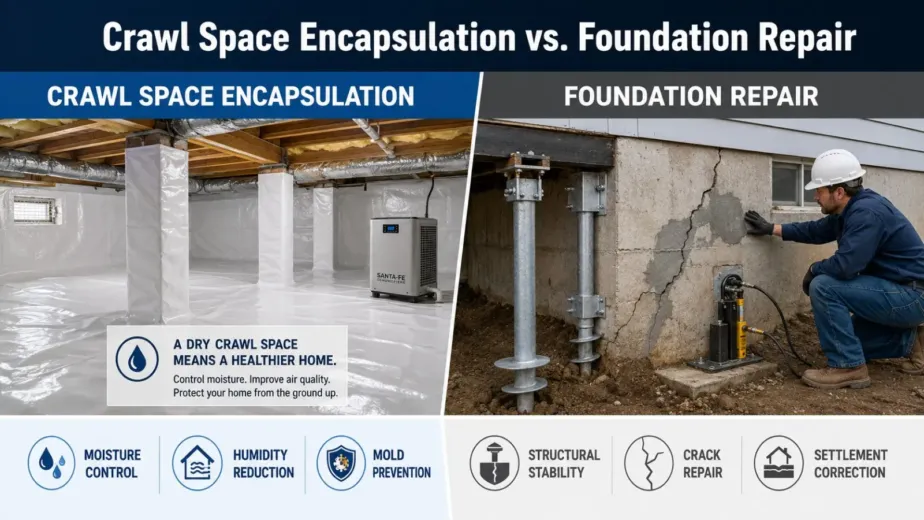
- Crawl space or basement seepage
For indoor moisture risks and cleanup standards, see IICRC S500 — the recognized professional standard for water damage restoration. For post-storm water response specifically, see our Raleigh water damage first-steps guide.
Power-Related Damage (Surge, Outage, Sump Failure)
Storm-related outages can create secondary damage:
- HVAC system interruptions
- Sump pump failure in crawl spaces
- Appliance surge damage
Preparedness guidance is outlined by ReadyNC and the NC Department of Public Safety.
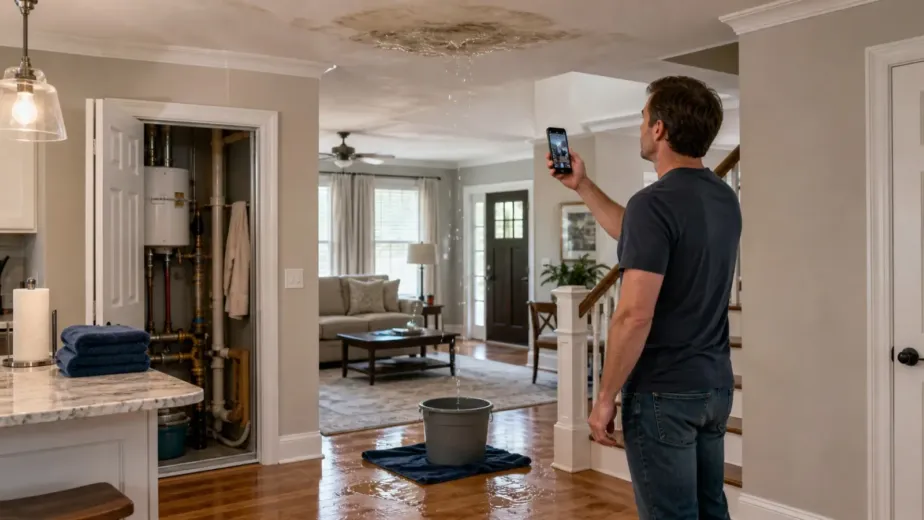
💬 HomeFREA Insight: Wind doesn’t usually destroy a roof outright — it lifts edges. The real problem is the rain that follows the wind, entering through openings the wind created. By the time you see ceiling stains inside, the roof has often been compromised for hours. That gap between wind exposure and visible interior damage is where most storm-related water issues hide.
Pre-Season Prep: What to Do in May Before Storms Form
Atlantic hurricane season runs June 1 through November 30. May is the right month to walk your home and address vulnerabilities before the first system forms.
Roof and Gutter Walk
Check for:
- Loose shingles
- Debris buildup in valleys
- Gutter separation or sagging
- Downspout discharge issues
Tree Assessment Around the House
Identify:
- Overhanging limbs within striking distance
- Dead or leaning trees
- Branches touching rooflines or siding
Window, Door, and Exterior Envelope Check
Inspect:
- Caulking failures
- Drafts or light gaps
- Warped door frames
- Damaged flashing
Sump Pump and Drainage Check
Confirm:
- Sump pump operation
- Battery backup (if installed)
- Yard grading directing water away from foundation
Document the Pre-Storm Condition
Take photos of:
- Roof surfaces
- Exterior walls
- Interior ceilings near exterior walls
This generally creates a baseline if you later need to file a hurricane home insurance claim. Pre-storm documentation often makes the difference between a clean claim and a contested one because it removes ambiguity about pre-existing conditions.
💬 HomeFREA Insight: The most underused tool in storm preparation is your phone camera. Twenty minutes of photos in May can save weeks of insurance back-and-forth in October. If a tree limb takes out a roof section, the adjuster will ask “what did this look like before?” — and the homeowner who has time-stamped May photos has a different conversation than the one who doesn’t.
Pre-season exterior assessment — book before June.
HomeFREA performs documented pre-season walkthroughs for Wake County homes so you have a time-stamped baseline before storms form. Most assessments are scheduled within 5–7 business days.
Call (919) 228-9048 | Get a Pre-Season Roof and Envelope Walk →
During the Storm: What to Do (And Not Do)
Active Storm Safety
Stay indoors and avoid exterior inspection during active wind or lightning conditions. Follow National Weather Service alerts and any local evacuation or shelter-in-place orders.
When Power Goes Out
- Avoid opening refrigerators repeatedly
- Use battery lighting instead of candles where possible
- Monitor basement or crawl space for water intrusion if it is safe to do so
When You Hear or See Damage Happen
Do not go outside during active wind or falling debris conditions. Wait until the storm passes before any inspection, and watch for downed power lines on the way out.
The First 72 Hours After the Storm

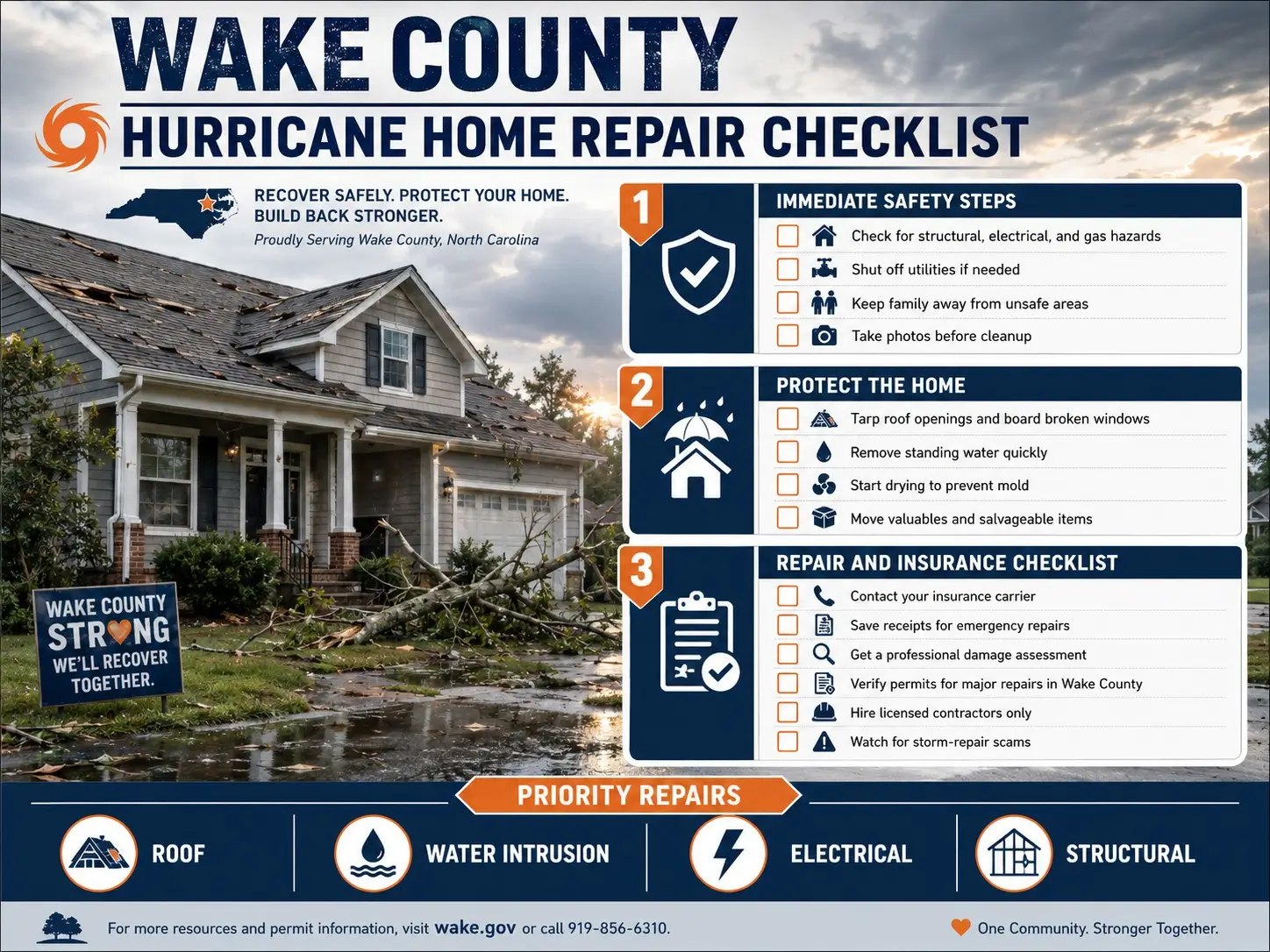
Hour 1–4: Safety and Initial Walk
Once conditions stabilize:
- Check for structural hazards
- Look for visible roof or tree damage
- Avoid unstable areas
- Watch for downed power lines and standing water near electrical equipment
Hour 4–24: Document and Mitigate
- Photograph all visible damage before moving anything
- Cover roof openings with tarps if it is safe to do so
- Move belongings away from wet zones
Hour 24–72: Insurance Notice and Mitigation
- Contact your insurance provider
- Begin emergency tarping or drying if needed
- Prevent secondary water damage
The NC Department of Insurance emphasizes prompt notice after loss events. Most policies require notification as soon as reasonably possible.
Post-Storm Damage Inspection Checklist
Roof and Attic
- Missing shingles
- Roof deck staining
- Wet insulation
- Daylight visible through roof boards
Exterior Walls, Windows, Doors
- Broken seals
- Water staining around frames
- Warping or swelling
Trees and Yard
- Fallen limbs
- Leaning trees
- Root upheaval
Interior (Ceilings, Walls, Floors, Basement / Crawl)
- Ceiling discoloration
- Bubbling paint
- Wet flooring edges
- Crawl space moisture
For moisture and mold cleanup standards, see EPA mold guidance and CDC mold information.
Mechanicals (HVAC, Water Heater, Electrical Panel)
- System shutdowns
- Moisture exposure
- Electrical interruptions
If any electrical equipment has been exposed to water, do not energize until inspected by a licensed electrician.
Hurricane and Storm Insurance Claims in NC
What’s Typically Covered
- Wind damage to roofs and siding
- Tree impact damage to structures
- Interior water intrusion caused by wind openings
What’s Typically Not (Flood, Surface Water, Maintenance)
- Ground flooding from heavy rain runoff
- Neglected roof or deferred maintenance issues
- Long-term leaks
Flood coverage is typically separate under NFIP policies through FloodSmart.
Wind/Hail Deductibles in NC
A wind/hail deductible is a separate, often percentage-based deductible that applies specifically to wind or hail losses, distinct from the standard all-perils deductible on a homeowners policy. In North Carolina, these typically range from 1% to 5% of dwelling coverage.
Many policies in North Carolina include a separate wind or hail deductible, often structured as a percentage of dwelling coverage rather than a flat dollar amount. This generally varies by carrier and policy terms and should be confirmed directly with your insurance provider or broker. Industry context is available via the NC Department of Insurance for NC-specific consumer guidance.
Hurricane Damage Coverage at a Glance (NC Homeowners Insurance)
| Damage type | Typically covered? | Policy type |
|---|---|---|
| Wind damage to roof, siding, soffit | Yes | Standard HO-3 / HO-5 |
| Tree or limb impact on structure | Yes | Standard HO-3 / HO-5 |
| Wind-driven rain through wind-created opening | Usually | Standard HO-3 / HO-5 |
| Ground flooding / surface water runoff | No | Separate NFIP flood policy |
| Sewer or sump-pump backup | Often excluded | Optional endorsement |
| Long-term leaks / deferred maintenance | No | Excluded |
| Food spoilage from extended outage | Sometimes | Carrier-specific endorsement |
Coverage outcomes depend on policy language, cause-of-loss determinations, and carrier interpretation. Always confirm with your licensed agent.
Documentation That Matters
For claim clarity, a defensible documentation set generally includes:
- Pre-storm condition images (the baseline)
- Time-stamped post-storm photos and video (the damage)
- Contractor inspection notes (the scope)
- Repair estimates (the cost)
The pre-storm vs post-storm comparison is often the single most influential element in claim adjustment.
When You Need a Permit for Storm Repair in Raleigh
Like-for-Like vs Structural Repair
Cosmetic repairs may not require permits, but structural work often does. See our Raleigh building permit cost and timeline guide for detailed permit ranges and process timing.
Roof Replacement and Permit Triggers
Full roof replacement or decking replacement typically requires permitting through the City of Raleigh Permit Portal.
Tree-Damaged Structural Repair
If framing, load-bearing walls, or major structural components are affected, permits are typically required under the NC State Building Code.
How to Spot a Storm-Chaser Roofer or Contractor
A storm-chaser contractor is an out-of-area roofer or general contractor who travels into a storm-affected market to sign quick repair contracts before homeowners can verify licensing, scope, or insurance alignment. Storm-chasers typically arrive within days of a major weather event, often from out of state, looking to write quick contracts before homeowners can do due diligence.
Red Flags After a Triangle Storm
Watch for any of the following:
- Out-of-state vehicles with no local presence
- Door-to-door solicitation immediately after storms
- Pressure to sign contracts on the spot
- Promises of “free roof through insurance”
- Large upfront payment requests
- Refusal to provide written scope before signing
- No verifiable NC contractor license
What to Verify Before Signing
- NC contractor license through the North Carolina Licensing Board for General Contractors (NCLBGC)
- Written scope of work
- Permit plan if required
- Insurance documentation clarity (carrier, policy, COI)
- Local business address and references in Wake County
Why You Want a Locally Established Contractor
Local contractors generally understand:
- Wake County permitting process
- Triangle storm patterns and typical damage profiles
- Standard insurance documentation expectations for NC carriers
- Local supplier relationships for material availability after a storm
💬 HomeFREA Insight: The “free roof through insurance” pitch is the single most common storm-chaser tactic in the Triangle. It usually means the contractor plans to inflate the scope to match the insurance payout, which can leave the homeowner exposed to fraud allegations or coverage denials. Legitimate contractors discuss your deductible and write scope based on actual damage, not insurance maximums.
Two Storm Scenarios
The following are illustrative scenarios drawn from typical Wake County storm damage patterns. Specific outcomes depend on storm intensity, home age, and prior maintenance condition.
Wind and Tree Damage in North Raleigh
A mature tree limb impacts a roof section, causing localized structural and water intrusion damage. Repair involves roof replacement, interior drying, and limited framing inspection. The work coordinates structural repair with water damage repair and finish reconstruction.
Water Intrusion in Hayes Barton
Wind-driven rain enters through compromised flashing, leading to ceiling stains and insulation saturation. Drying and selective drywall replacement are required before interior repainting. Older Hayes Barton and Five Points homes often have additional considerations during post-storm rebuild — see our Hayes Barton vs Five Points renovation reality check for context on layered system conditions in pre-1940s Raleigh homes.
How HomeFREA Approaches Post-Storm Repair
HomeFREA focuses on structured recovery:
- Post-storm damage assessment
- Scope validation for insurance alignment
- Permit coordination when required
- Full rebuild planning when interiors are affected
We work across Wake County including Raleigh, Cary, Apex, Holly Springs, Wake Forest, Durham, and Fuquay-Varina.
Request a Post-Storm Damage Assessment
Send photos and your address. We provide documented walkthroughs and structured repair scopes that align with NC insurance claim documentation requirements — covering Wake County and the full Triangle.
Call (919) 228-9048 | Request a Post-Storm Damage Assessment →
Frequently Asked Questions
What kind of hurricane damage do Wake County homes typically get?
Wake County homes typically experience wind damage, fallen trees or limbs, roof shingle loss, and water intrusion through compromised exterior building components. Storm surge flooding is generally not a common inland risk. Damage varies depending on tree coverage, roof age, and storm intensity.
How do I prepare my Raleigh home for hurricane season?
Prepare by inspecting your roof, cleaning gutters, trimming trees near structures, and documenting exterior conditions. Ensure drainage flows away from your foundation. ReadyNC provides statewide preparation guidance for North Carolina homeowners.
What should I do in the first 24 hours after a storm hits Raleigh?
Prioritize safety, then document visible damage with photos and video before moving anything. Cover roof openings with tarps if safe, contact your insurance provider, and begin mitigation within 24 hours to prevent secondary water damage.
Is hurricane damage covered by homeowners insurance in NC?
Hurricane-related wind damage is typically covered under standard homeowners insurance policies depending on cause and policy language. Flood damage is typically excluded and generally requires separate NFIP coverage. See NC Department of Insurance guidance for NC-specific consumer information.
Do I have a separate hurricane or wind/hail deductible in NC?
Many North Carolina homeowners insurance policies include a separate wind or hail deductible, typically calculated as a percentage of dwelling coverage (commonly 1% to 5%) rather than a flat dollar amount. On a $400,000 dwelling coverage policy, a 2% wind/hail deductible equals $8,000 out of pocket before coverage applies. The exact percentage and trigger conditions vary by carrier and policy and should be confirmed directly with your insurance provider or broker.
Is flood damage from a tropical storm covered by my homeowners policy?
Flood damage from rising water or surface runoff is typically not covered under standard homeowners insurance. Separate flood insurance is generally required through NFIP via FloodSmart.
Do I need a permit to repair storm damage in Raleigh?
Permits are typically required for structural repairs, roof replacements, or major reconstruction. Cosmetic repairs may not require permits. See the City of Raleigh Permit Portal for current requirements.
How do I avoid storm-chaser contractors after a Triangle storm?
Avoid contractors who appear immediately after storms, request upfront payment, lack local licensing verification, or pressure you to sign on the spot. Always verify licenses through the NC Licensing Board for General Contractors and request a written scope before signing.
How long do I have to file a storm damage claim in NC?
Most North Carolina homeowners insurance policies require notice of loss “as soon as reasonably possible” — typically interpreted as within 24 to 72 hours when safe to do so. Specific deadlines for filing proof of loss and completing repairs vary by carrier; check the “Duties After Loss” section of your policy. The NC Department of Insurance recommends notifying your insurer promptly to avoid coverage disputes, and emergency mitigation (tarping, water extraction) should begin within 24–72 hours to prevent secondary damage.
Does HomeFREA do post-storm home repair in Wake County?
Yes. HomeFREA provides post-storm assessment, documented repair scopes, and reconstruction services across Wake County and the Triangle. We provide documented walkthroughs and structured repair scopes designed for insurance claim alignment, depending on post-storm demand and scheduling availability.
Key Takeaways
- Wake County storm damage is primarily wind, trees, and water intrusion, not storm surge
- May is the right month for pre-season home documentation and prep
- The first 72 hours after a storm generally determine claim clarity and repair efficiency
- Insurance coverage depends heavily on cause of damage and policy structure
- NC policies often have separate wind/hail deductibles structured as a percentage of dwelling coverage
- Pre-storm and post-storm documentation is the most influential element in claim adjustment
- Local, licensed contractors generally reduce risk after storm events compared to out-of-state storm-chasers
- Permit requirements depend on whether repairs are cosmetic or structural
Request a Post-Storm Damage Assessment
If your home has been impacted by a tropical storm or hurricane, we provide structured inspections and repair scopes designed for insurance clarity and rebuild planning.
Documented walk, written scope, claim coordination. Wake County and the full Triangle.
Storm damage in Wake County? Get a documented walkthrough.
HomeFREA delivers post-storm assessments and insurance-aligned repair scopes across Raleigh, Cary, Apex, Holly Springs, Wake Forest, Durham, and Fuquay-Varina. Documented walk, written scope, claim coordination.
This guide is educational and not legal, insurance, electrical safety, structural-engineering, or emergency-response advice. Storm damage situations vary widely and require professional evaluation. Always confirm specific coverage and procedures with your licensed insurance agent or broker, the North Carolina Department of Insurance, the National Weather Service for active storm guidance, ReadyNC and Wake County Emergency Management for preparedness, licensed electricians for any electrical concerns, certified mitigation professionals (per IICRC S500), the NC Licensing Board for General Contractors for contractor verification, and applicable Raleigh and Wake County authorities for permit requirements before relying on any information in this article.